
Not long ago, it seemed like parents could send their kids off to school or a local program with a reasonable expectation that the values being reinforced—things like hard work, teamwork, respect, and responsibility—aligned with what was being taught at home. Whatever happened to those open, “neutral” spaces where people could simply get along?
In a recent New York Post op-ed Leonard Sax talks about the importance of this kind of neutrality and highlights the growth of Trail Life and the shift in Scouting America. He mourns that it has become harder for parents to find spaces for their children that feel truly neutral. He describes a growing divide in American culture—one that increasingly forces families to choose between competing moral and ideological frameworks.
There’s an assumption present in Sax’s article that reflects a broader cultural attitude that explicit adherence to particular moral perspectives is unnecessary or even undesirable. We imagine that neutrality can bind us together, or at least allow us to coexist in harmony.
But that assumption deserves closer examination. While the division Sax identifies may feel new, the need to choose is not.
Every institution that seeks to shape young people—schools, youth programs, teams, and communities—must operate from some understanding of truth, morality, and human purpose. There has never been such a thing as a truly “apolitical” space when it comes to forming character. Nature abhors a vacuum. A value system will emerge. The only question is: which one?
Sax rightly emphasizes that parents want their children to become the best men and women they can be. He encourages families, where possible, to seek out environments that are “diverse, welcoming, and apolitical.” Yet he also acknowledges the growing difficulty of that task, as institutions increasingly reflect sharply different moral visions.
That tension reveals something deeper. What we are witnessing is not simply a rise in political division, but the erosion of a shared moral consensus that once undergirded American life. A 2020 study by the Cultural Research Center at Arizona Christian University found that 58% of Americans surveyed believe that moral truth is up to the individual to decide, rather than being based on the Bible.
For generations, many of our institutions—whether explicitly or implicitly—drew from a broadly biblical understanding of truth, virtue, and human dignity. The Boy Scouts of America may not have been directly affiliated throughout most of its history with any particular religion, but it was always clearly moral. Robert Baden Powell said that “Scouting is nothing more than Christianity applied.” While, certainly, not every Scout or leader professed faith in the God of the Bible (or in any deity, for that matter), the Christian underpinnings foundationally shaped the program and the values it promoted.
Over time, however, many institutions attempted to redefine themselves apart from those roots. In doing so, they did not become neutral. They simply exchanged one moral framework for another. Secular humanism, like any worldview, carries its own assumptions about truth, identity, and purpose. It is not an absence of belief; it is a belief system of its own with its own convictions about identity, truth, and what it means to live well. If you don’t believe me, just try walking onto a college campus and arguing that moral truth does not vary from person to person or even culture to culture and see how quickly you’re met with some intense moral certainty.
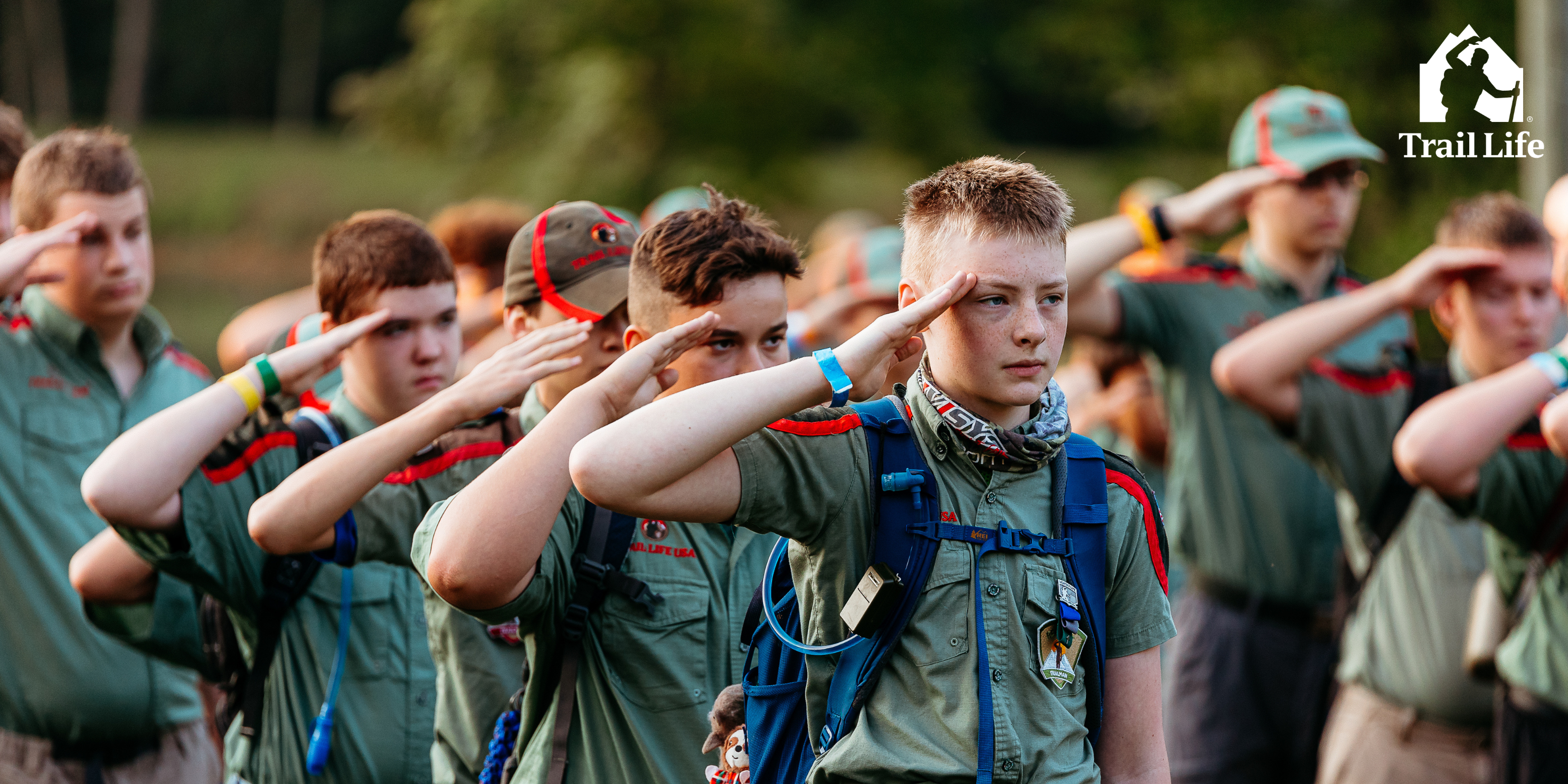
When Trail Life USA was founded, it was not an effort to enter a political contest or carve out a new ideological lane. It was a decision to remain anchored in a moral foundation that had long guided the formation of young men. The goal was simple: to provide a place where character is built on something steady, something tested, something true.
Because character cannot be formed in shifting sand.
Boys are far more perceptive than we sometimes give them credit for. They can sense when values are treated as flexible, when standards seem to change with outside pressure, or when leaders appear uncertain about what they believe. That kind of instability erodes trust.
Formation requires consistency. It requires leaders and institutions that demonstrate coherence over time—where what is taught today will still be true tomorrow.
The appeal of neutrality is understandable. In a divided culture, it is tempting to imagine spaces where differences can simply be set aside. But when it comes to raising children, neutrality is not a stable foundation. Thomas Jefferson wrote, “On matters of style, swim with the current; on matters of principle, stand like a rock.” You simply cannot build character without defining what is good, what is true, and what is worth pursuing.
At Trail Life, we believe those answers are not arbitrary or temporary. They are rooted in timeless truths—truths that do not shift with cultural trends or political winds.
Far from dividing, that kind of clarity provides a common ground strong enough to unite people across superficial differences. It’s what makes the old motto e pluribus unum (out of many, one) possible. It has the power to break down racial and political divides. It gives people something firm to stand on and strive toward together. Vague commitments to be nice, diverse, inclusive, and apolitical can’t achieve that. They never have.
Sax argued that, “As a parent, your first priority has to be to help your child to fulfill his or her potential, to become the best man or woman they can be.” If we truly want to help our children reach their full potential, we must give them more than open-ended ideals. We must give them a foundation.
Because in the end, the question is not whether our children will be shaped—but by what.
Find a Troop near you or Learn how to bring Trail Life to your community at TrailLifeUSA.com