The same wiring that makes teenage boys expensive to insure is the very wiring that propels exploration, invention, and bravery. Insurance companies know the statistics. Teenage boys take more risks. They drive faster. They climb higher. They test limits. And yes, sometimes they make costly mistakes.
Understandably, this propensity is sometimes seen as a defect to be corrected. However, that appetite for risk is not simply a liability. It is raw material. It is the same impulse that has driven men to cross oceans, scale mountains, start companies, storm beaches, and try again after spectacular failure. It is the restless edge-testing that pushes a young man to ask, “What if I try this?” and, more importantly, “Do I have what it takes?”
The question is not whether boys will seek risk. The question is whether we will try to stamp out that instinct or whether we will try to cultivate and channel it.
In recent years, our culture has moved toward eliminating risk wherever possible. Playgrounds are padded. Schedules are meticulously structured. Conflicts are mediated instantly. Problems are pre-solved. Parents hover. Schools regulate. We have become deeply uncomfortable with scraped knees, bruised egos, and failed attempts.
The instinct is understandable. We love our sons. We want them safe. But if we eliminate risk from boyhood, we eliminate the training ground for courage, resilience, and innovation.
Consider Thomas Edison. He famously failed thousands of times before producing a practical lightbulb. When asked about those failures, he didn’t frame them as defeat. He framed them as discovery — thousands of ways that didn’t work.
The Wright brothers crashed repeatedly before achieving sustained flight. Their breakthroughs were not born in safety but in persistence: trial, error, adjustment, repeat.
And as a result? We have light bulbs in every house and can safely fly across entire oceans and continents in a matter of hours.
Innovation like that drives progress, combats threats, and promotes human flourishing. But it requires familiarity with failure.
Failure requires emotional fortitude. Fortitude requires exposure to difficulty early. That progression does not begin in adulthood. It begins in boyhood.
A boy who is never allowed to try hard things will not magically become a man who can withstand hard things. A boy who is rescued from every setback will not suddenly develop resilience when the stakes are higher. A boy who has never tested his strength against resistance will struggle to summon courage when resistance finds him.
This does not mean we throw boys into danger or shrug off recklessness. That’s not wisdom. It’s neglect. The goal is not unmanaged risk. It is managed, graduated, purposeful challenge.
Wise parents do not remove all risk. They calibrate it. They stand close enough to guide, but far enough to let a boy discover what he’s made of. They let him climb — after teaching him how. They let him build — with real tools and real responsibility. They let him try and fail — and then coach him through what comes next. They resist the urge to over-rescue.
Because every manageable fall teaches something. Every hard loss strengthens something. Every failure survived builds evidence: I can endure this. And that evidence compounds.
As CEO of Trail Life USA and father of two sons, I’ve watched this happen first hand. In our program, safety is not optional — it is foundational. Boys are supervised by trained adults. Standards are clear. Boundaries are firm. Recklessness is never celebrated. But within those boundaries, boys are given room to try.
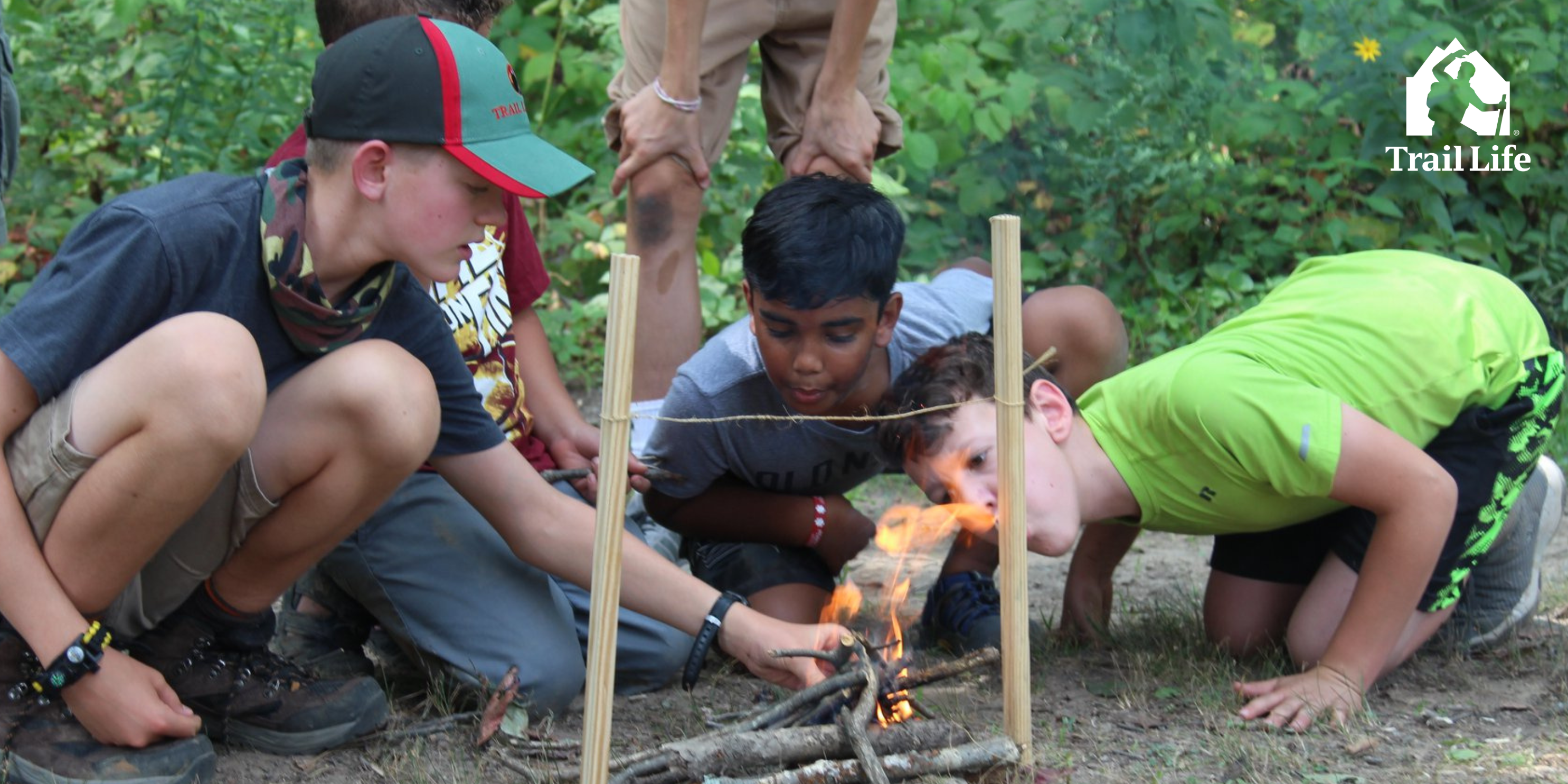
They learn to use knives and axes responsibly. They learn to build a fire after a hard rain. They hike challenging terrain. They take on real responsibility and lead their peers. Sometimes they struggle. Sometimes they fail. And then they try again.
We don’t eliminate difficulty. We walk with them through it.
And what we see is remarkable. Boys who once doubted themselves begin to stand taller. Boys who were quick to quit learn to persist. Confidence grows not from applause, but from accomplishment earned through effort.
History is shaped by men who were willing to step into uncertainty. Inventors, explorers, entrepreneurs, first responders, missionaries, soldiers — their courage did not materialize in a vacuum. It was formed, layer by layer, through exposure to difficulty.
If we want men who can start bold ventures, create unforgettable art, solve unsolved problems, or stand firm when circumstances demand sacrifice, we must give boys something sturdy to push against now.
A culture that cannot tolerate failure cannot produce innovation. A generation that has never faced manageable danger will struggle to face real danger when it comes. The irony is that in trying to protect boys from every bruise, we may be weakening the very muscles they need most.
The same wiring that makes teenage boys expensive to insure is the wiring that makes exploration, invention, and bravery possible. Our task is not to suppress it, but to shape it. Not to crush it, but to cultivate it.
Because courage is not inherited. It is practiced. Resilience is not downloaded. It is developed.
And if we want a future filled with men who can try again, stand firm, and build boldly, we must give our boys room — wisely, intentionally — to discover that they can.
Find a Troop near you or Learn how to bring Trail Life to your community at TrailLifeUSA.com