
“...give me grace to hear thee calling on me in thy word, that it may be wisdom, righteousness, reconciliation and peace to the saving of my soul in the day of the Lord Jesus. Grant that I may hear it with reverence, receive it with meekness, mingle it with faith, and that it may accomplish in me, Gracious God, the good work for which thou has sent it. Bless my family, kindred, friends and country, be our God & guide this day and for ever for his sake, who lay down in the Grave and arose again for us, Jesus Christ our Lord, Amen.”
—George Washington, age twenty
The Fear of the Lord
Some men are revered because they demand it. George Washington was revered because he did not.
He was tall, strong, and commanding. Soldiers stiffened when he passed. Statesmen lowered their voices. Foreign kings watched him with interest from across the ocean. Yet the man who could have claimed a crown chose instead to bow his head. Washington knew that honor from men was fragile. He recognized that all he had, all he was, was from and for His heavenly Father.
Reverence was the quiet strength beneath his public greatness. It shaped how he saw himself, how he used authority, and how he led a weary, half-frozen army through the dark winter of war.
Washington feared God more than failure, more than hardship, more than the praise or blame of men. That holy fear did not make him timid; it made him steady. It gave him the courage to kneel when everything in him must have wanted to simply stand and bear it alone.
A Quiet Giant
Long before the snow of Valley Forge, reverence had taken root in Washington’s life.
He was born into a respected Virginia family, but not into great wealth. When his father died while George was still a boy, he gained early responsibilities and a sober view of the world. Much of his education came not in classrooms but on horseback and under open skies. As a young surveyor he spent weeks in the wilderness, learning to endure hardship, read the land, and keep steady in uncertainty. In time he became a soldier, then a commander, then a farmer and statesman. Responsibility seemed always to find him.
Those who knew him saw that he was not driven by speeches or boasts. He was a man of action—strong-willed and capable of passion—yet governed by an inner restraint. His adopted granddaughter would later say that mottos like “Deeds, not words,” and “For God and my country,” captured the spirit of his life.
That restraint was rooted in reverence. From his youth he wrote prayers marked by humility:
“Remember that I am but dust… cover my transgressions with the obedience of thy dear Son… that the sacrifices I have offered may be accepted by thee.”
This was not the voice of a man enamored with his own virtue, but of one who knew he stood before a holy God. That conviction shaped how he viewed authority—not as a prize to claim, but as a stewardship entrusted by the One who grants and removes it.
Steady Under Fire
Years before the army shivered at Valley Forge, Washington’s men learned what kind of leader rode at their head. In the chaos of battle—musket smoke thick as fog, cannon fire shaking the ground—his presence seemed almost impossible to miss. He sat tall in the saddle, urging his men forward when lesser commanders would have hung back.
At Monmouth, bullets snapped through the air like angry hornets. Horses screamed. Men faltered under the heat and the roar. Washington did not. He spurred his mount straight into the broken line, rallying troops, his voice cutting through the din. Officers later swore that they saw bullets pass so near him that his coat was torn, yet he never flinched.
Moments like these spread quickly through camp. To the weary private warming a tin cup by the fire, Washington was more than a distant general—he was the tall figure who had ridden into danger beside him. He was courage on horseback, a man whose steadiness under fire made other men steady.
Winter at Valley Forge
By the winter of 1777–1778, the American cause hung by a thread. The Continental Army limped into its winter encampment at Valley Forge—hungry, poorly clothed, and battered by defeat. Frostbitten feet bled on frozen ground. Disease spread through crude huts. As many as a quarter of Washington’s soldiers would die from sickness and exposure.
Washington himself could have quartered in comfort in Philadelphia or nearer to home. Instead, he chose to “share in the hardship” and “partake of every inconvenience,” living with his closest aides in a modest stone house overlooking Valley Forge Creek, in the middle of the suffering, not removed from it.
Outside, the political winds were no warmer. Critics in Congress questioned his competence. Ambitious officers whispered of replacing him. Supply lines failed; promises from politicians arrived faster than food or shoes. Washington was carrying not only the burden of command but the weight of a cause that looked, from every earthly vantage point, to be on the verge of collapse.
He was a towering figure—horseman, warrior, general—but no amount of natural strength could carry that load in his own power.
And so, according to a story passed down through the years, Washington slipped away from camp and into the woods to pray.
The Prayer in the Snow
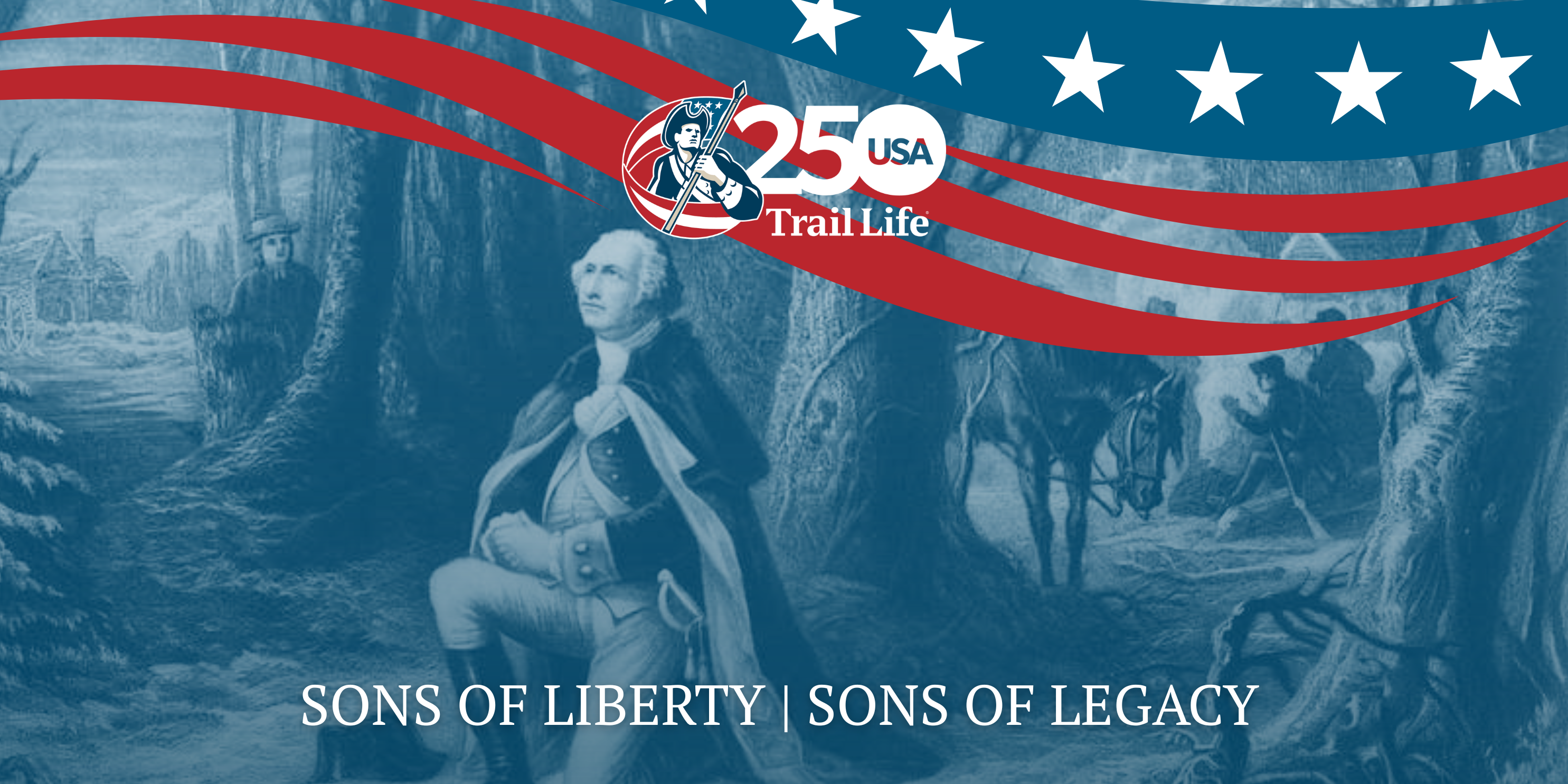
We’ve all seen the paintings of Washington kneeling in the snow beside his horse, his hat removed in reverence, head bowed or looking imploringly up to heaven as he beseeched God on behalf of his countrymen. It’s a striking moment, and the picture it paints is faithful to what Washington’s contemporaries repeatedly observed in him.
Those who served with him testified that he was habitually devout—that he rose early for private prayer, that he was found on his knees in his tent, that he began and ended his days acknowledging the hand of Providence.
So we may picture him there, in the hush of the woods, snow muting the sounds of camp, a weary general kneeling in the cold. Around him, an army shivered and grumbled. Behind him, a Congress wavered. Before him, the future of a nation lay hidden.
Washington knew strategy. He knew logistics. He knew the feel of a horse beneath him and the weight of a sword in his hand. But he also knew his limits. In that moment, reverence bent his knees. That posture—strong shoulders stooped in prayer—is the real measure of his greatness.
Reverence in Power
Reverence did not make Washington reluctant to lead; it made him judicious with power. When independence was finally won, his reverence for God and respect for rightful authority were tested in a new way.
The army was camped at Newburgh, restless and unpaid. Some officers hinted that Washington should use the troops to seize control and bring order under his personal rule. Others suggested that the young nation would be safer if he accepted some permanent, quasi-royal authority, a “necessary” strongman to guide the fragile Republic.
It would have been easy. The soldiers adored him. Many civilians would have welcomed the stability. History is filled with generals who took their armies and turned republics into monarchies.
But Washington’s heart was elsewhere.
In December 1783, in Annapolis, he stood before Congress to resign his commission as commander-in-chief. He spoke not as a man grasping for a throne, but as a servant laying down his life for his friends:
“I resign with satisfaction the appointment I accepted with diffidence… my gratitude for the interposition of Providence… increases with every review of the momentous contest… I consider it an indispensable duty to close this last solemn act of my official life by commending the interests of our dearest country to the protection of Almighty God.”
Then he offered his commission and returned to Mount Vernon, preferring the quiet of home to the “glare… of elevated office,” which he valued only insofar as it allowed him to “promote human felicity.”
Years later, when the Constitution was framed and the nation begged him to be its first President, he accepted—reluctantly—as a duty, not a prize. He led for eight years, establishing precedents, calming conflicts, strengthening the fragile Union. When the time came, he again stepped down, refusing a third term and proving to the watching world that in this new Republic, power would be limited, even for its most beloved leader.
It’s in sinful man’s nature to cling to power. But reverent men release it when their work is done.
Reverence and the Next Generation
Reverence is not weakness. It is the strength to remember who God is—and who we are not. In Washington we glimpse what humble leadership looks like: a man naturally revered yet unwilling to revere himself, a commander who shared the hardship of his men, a leader who knelt in crisis rather than pretending to be sufficient.
That same quiet strength is what we need to cultivate in boys today. In Trail Life, this happens on the trail, around campfires, and in the ordinary moments of shared adventure. Here, young men learn that real courage begins with humility, that authority is a trust, and that strength is meant for service. They discover that prayer is not a last resort but a first instinct, and that honoring God shapes how they treat others—whether younger boys, peers, or those in authority.
In a culture eager to crown the self, this is a different path. It is the way of the kneeling general…the way of a Savior who came not to be served but to serve. May our sons grow into men who accept leadership when called yet refuse to cling to it; men whose confidence is steadied by reverence; men who seek not the spotlight, but the smile of their Lord.
Find a Troop near you or Learn how to bring Trail Life to your community at TrailLifeUSA.com