Imagine Valley Forge in the winter of 1777. The cold is bitter. Snow piles in drifts. Wind cuts through threadbare clothing. Men are hungry, sick, and freezing. Some have wrapped their feet in rags, leaving blood in the snow. The Continental Army is barely holding together. In Congress, there are whispers: Is George Washington the right man? Should he be replaced?
Barely a year after the signing of the Declaration of Independence, America’s story could have ended before it truly began. But it didn’t.
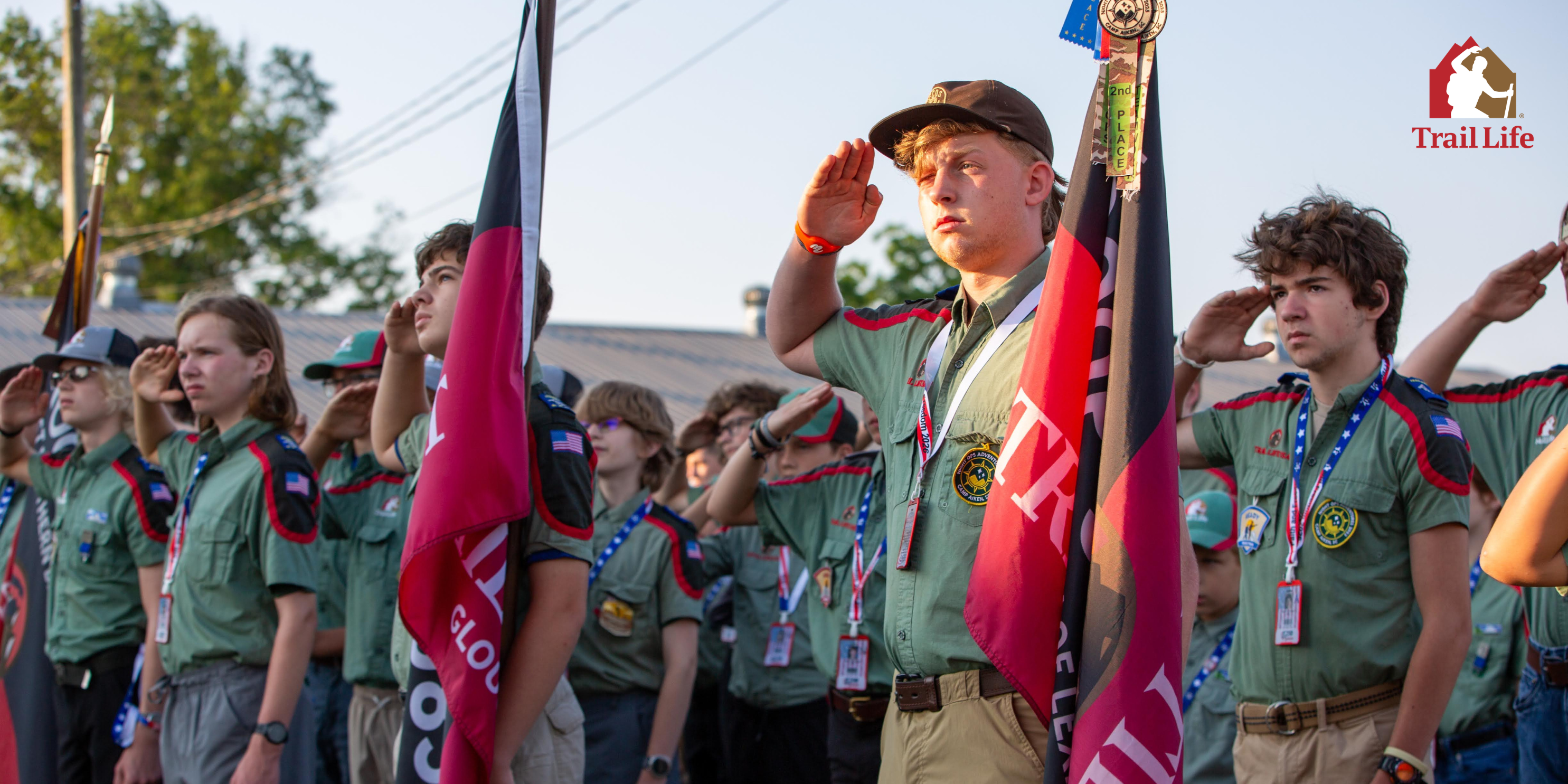
And the reason I believe America’s best chapters may still be ahead is because of the young men being raised in Trail Life today. Trailmen are not merely an audience for the story of one nation under God. They are the next chapter.
The Character That Secured a Nation
As America marks 250 years since the signing of the Declaration of Independence, we should celebrate the courage and sacrifice of those who came before us. But anniversaries do more than invite celebration. They invite reflection.
The question is not only, “What did they build 250 years ago?” The deeper question is, “Do we still have what it takes to sustain it for another 250 years?”
Our Republic was not secured by brilliant ideas alone. It was not preserved merely by the stroke of a quill or the flash of a musket.
It was secured by the character of men. John Adams stood with conviction. Patrick Henry with courage. James Madison with wisdom. Paul Revere with vigilance. George Washington with strength and reverence. These men were not made in a moment. Their character was formed over years through discipline, hardship, responsibility, and faith in God.
President Herbert Hoover once observed that the glory of a nation rests in the character of its men—and that character begins in boyhood. The future is always carried forward by the boys of today. That means the work of forming boys is not a side issue. It is essential work.
Boys Are Not Problems to Be Managed
Our culture often misunderstands boys. They are told to sit still, stop competing, stop climbing, stop taking risks, and stop being so loud. Their energy is treated as a disruption. Their appetite for adventure is treated as a defect. Their strength is too often viewed with suspicion.
But boys are not problems to be managed. Their God-given drive toward competition, exploration, and risk is raw material. It is the same restless instinct that has moved men to cross oceans, scale mountains, launch rockets, build companies, defend nations, and try again after failure.
That instinct must be shaped by wisdom, but we must take care lest we crush it. In our understandable desire to protect boys, we have tried to remove nearly every obstacle from their path. We solve problems before they face them. We settle conflicts before they work through them. We soften every fall.
But a boy who is never allowed to try hard things will not magically become a man who can withstand hard things. A boy who is rescued from every setback will not suddenly become resilient when the stakes are higher.
Courage is not inherited. It is practiced. Resilience is not downloaded. It is developed. Every manageable fall teaches something. Every hard loss strengthens something. Every failure endured gives a boy evidence that says, “I can get through this.” We should not eliminate difficulty from boyhood, but rather should walk through it with them.
The Training Ground for Courage
Trail Life is designed to give boys what so many modern environments have removed: managed, graduated, purposeful challenge. That does not mean recklessness. Safety is foundational. Standards matter. Boundaries matter. Trained adults matter.
But within those boundaries, boys need room to act. They need to build fires after a hard rain. Use real tools responsibly. Hike difficult terrain. Lead their peers. Make decisions. Experience consequences. Struggle. Fail. Adjust. Try again. Wise leaders stand close enough to guide, but far enough away to let a boy discover what he is made of.
That kind of formation can be seen in a 15-year-old Trailman named Ricky. During a 100-mile paddling expedition along the Missouri River, Ricky served as First Officer for a crew of boys from different Troops and states. Some were older. Some outranked him. Near the end of the expedition, the crew faced a grueling 30-mile day on the river. The heat was relentless. Arms were burning. Tempers were short. Everyone was exhausted.
Then one of the boys reached a breaking point—dehydrated, overheated, hungry, and unraveling emotionally. Every eye turned to Ricky. He was just as tired. Just as hot. Just as ready to stop. But he evaluated the situation, got the crew to shore, and gave simple directions: “Water. Shade. Stay together.” No panic. No hesitation. Just quiet, focused leadership.
That moment did not create Ricky’s character. It revealed it. His steadiness had been built through dozens of campouts, responsibilities, conversations, failures, and hard-earned successes. Character is revealed in a crisis, but it is formed long before the crisis arrives. That is a young man being made ready.
The Power of a Man Who Stays
Challenge alone is not enough. Boys also need men who stay. A young man named Lucas learned this through a Trail Life mentor named Bill. Lucas had been adopted as a child. Later, his adoptive parents divorced, and his father left. Lucas carried anger, confusion, and a deep belief that dads leave because that is what men do.
Then he joined a Trail Life Troop. There he found men who noticed him, listened to him, and showed up week after week. On one cold campout, Lucas decided the Troop needed a flagpole. Bill agreed to help him build it. They worked late into the night. The other boys went to sleep. Lucas grew tired and wanted to quit. But Bill stayed. “Lucas, we’ve got to finish this,” he told him. “We can’t give up.”
Together, they worked until one in the morning and raised a 20-foot flagpole built by hand in the dark and cold. When the sun came up, Lucas could point to something real and say, “I did that.” But the flagpole was not the most important thing built that night. Trust was built. Lucas learned that he could finish something difficult. He also learned that there was a man in his life who would remain beside him.
Years later, Lucas described Bill simply: ““He listens to me—everything, all my ideas, all my crazy plans. He’s here for it.”
He’s here for it.
Do not underestimate the power of that sentence. Bill did not offer perfection. He offered presence. He said, through his actions, “I’m here. I’m staying. And I believe in you.” That is mentorship. That is fatherhood. And it can change the direction of a life.
You Are Not Too Young to Matter
To the young men of Trail Life: You are not too young to matter. You are not too ordinary to lead. You are not too far behind to grow. Ricky is not a legend. He is a teenager who showed up and did the work. Lucas is not a special case. He is a young man who allowed someone to invest in him and became someone worth following. The same potential is in you.
Every challenge, every campout, every conversation around the fire, and every responsibility you accept is forming you into the man you are becoming.
The next 250 years are not waiting for someone else to show up. They are waiting for you.
A Pledge for the Next 250 Years
At Valley Forge, Washington was known as a strong and commanding leader. Soldiers stiffened when he passed. Statesmen listened when he spoke. Foreign powers watched him closely. But strength alone does not explain what sustained him. The image that matters most is Washington on his knees. The man who could have reached for power bowed before God. Reverence steadied him. Faith shaped how he endured hardship, carried authority, and later surrendered that authority. That is the model.
America’s future will require men who are steady when others panic, humble before God, willing to lead when leadership is difficult, and ready when responsibility finds them. Men who serve when called, stand when required, and kneel when necessary.
Trail Life is not merely preparing boys to survive an uncertain culture. God is using this movement to raise young men who can help turn the tide.
So let us pledge ourselves again—to faith, steadiness, courage, and honor. Let us invest in boys. Let us walk with them through challenge. Let us become men who stay. And let us raise a generation of Trailmen who are ready to carry the load.
The next 250 years rest in the hands of the boys we are forming today. Trailmen are America’s next chapter.